Case Study
Reconciliation down from 40 hours a week to 12
Murray Downs Golf & Country and Swan Hill Club sit minutes apart with two sets of gaming laws. All 133 gaming machines are now cleared daily, and each club balances in an hour.

- Weekly reconciliation down from 40 to 12 hours.
- 1,456 hours a year given back, 3/4 of a FTE salary.
- $48,300 annual labor cost saved.
- Two-thirds reduction in cash held on site.
- 15 minutes to trace a variance that once went unseen.
PRODUCTIVITY#
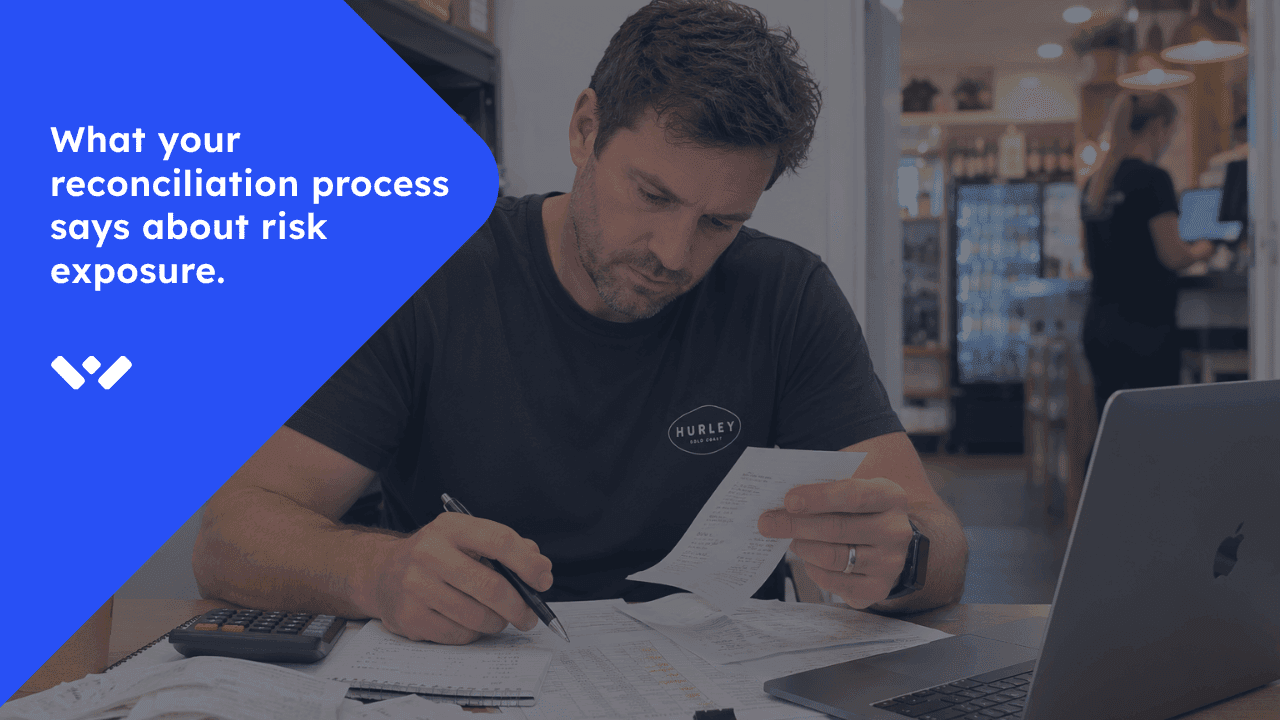
Mark Parry is an accountant by trade. When he arrived, both clubs ran on Excel. Cash and tills were counted by hand, counted again upstairs, then banked, and nobody was confident in the number. Gaming clearances ran three times a week, about four hours each.
Today, one person balances each club in an hour, every day. Clearances went from three a week to daily across all 133 machines, and the total time still fell by 70 per cent. That is 1,456 hours a year returned to the two clubs, roughly three-quarters of a full-time role. It has come out of the back office rather than off the roster: nobody comes in early to count, and managers are back on the floor.
"Reconciliation was 40 hours, across all different levels. Now it’s one level, 12 hours".
— Mark Parry, CEO, Murray Downs Golf & Country Club and the Swan Hill Club
PROFITABILITY#
Costed against Registered and Licensed Clubs Award minimum rates, those hours are worth around $930 a week, or roughly $48,300 a year. Since the club pays above award for the supervisory and finance roles that carried most of the old process, that is a floor rather than a projection.
The second gain is cash. Clearing daily rather than three times a week, alongside cash recycling machines at both venues, has cut the cash held on site by around two thirds. For a regional club that is a safety outcome before a financial one, and the club’s insurer has taken the same view.
Visibility has tightened with it. When something does not add up it now surfaces within a day: a $100 variance was recently traced in about 15 minutes, down to the till and the time. It may never have surfaced at all before.
"We just don’t have leakage like that. No one can say I’ve got no idea. We just know, immediately".
— Mark Parry, CEO, Murray Downs Golf & Country Club and the Swan Hill Club
ON THE FLOOR#
A back office system is tested by the people who use it, not the person who signs for it. Mark takes that view himself: researching the decision, he asked to speak to the people touching the system rather than other chief executives.
Implementation was run by his operations team. Knowledge that once sat in one accountant’s head and one workbook now sits with the people running the venues, nobody needs spreadsheet skills to do a cash up, and when something looks wrong there is a sequence to follow rather than an investigation to launch.
"I’m okay with numbers and spreadsheets, but trying to understand the processes and the different tabs was a nightmare for me. Wirely has streamlined it. And troubleshooting- if there’s an issue, having a process to follow is nice and quick and simple".
— Blaede Hawkins, Operations Manager, Murray Downs Golf & Country Club
"We’ve got a fairly complex organisation. We clear 91 poker machines at this venue and 42 at the other on a daily basis, with pretty much all the bells and whistles, multiple tills, multiple points of entry. And we’re getting a balance done in an hour at each place. I don’t know how you could do it any quicker, to be honest.”
— Mark Parry, CEO, Murray Downs Golf & Country Club and the Swan Hill Club
On the fence? Mark has offered to speak with operators weighing up the same decision, Mark is happy to take questions from the people who will use the system as well as other CEO's. He rang three operators himself before signing. Connect with Mark